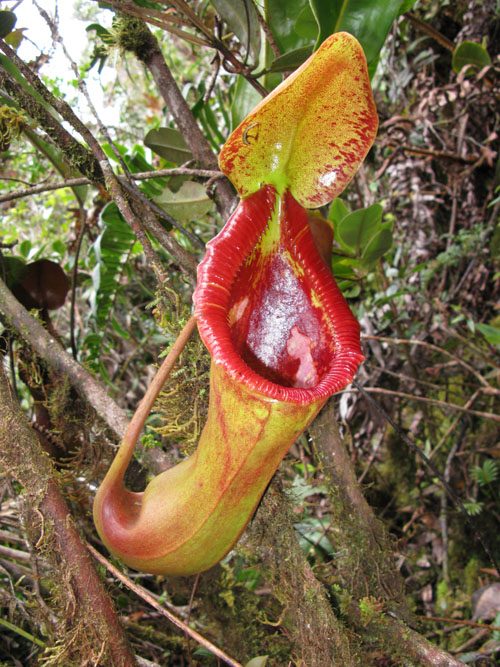
Nepenthes, Tropical Pitcher Plants
Type: Carnivorous | Size: Large, Can grow up to 15m but slow growing in smaller pots and terrariums.
Tropical Pitcher Plants make for a great terrarium plant when in larger terrarium environments. They like high humidity and some ventilation.
How to grow and care for Tropical pitcher plants (Nepenthes)
Nepenthes are climbing and scrambling vines from the humid tropics of South-East Asia, from Borneo and Sumatra to the Philippines. They produce hanging pitchers at the leaf tips that fill with fluid to drown and digest insects. The genus splits into lowland species that want constant warmth and highland species that need cool nights.
Best terrarium setup for Tropical pitcher plants (Nepenthes)
They are excellent in a larger, humid terrarium, but they are vines, so give them height and something to climb. Highland species in particular flourish in a closed, misty terrarium with cool nights. Grow them in an airy, chunky mix of Sphagnum, bark and perlite rather than dense peat, because their roots want moisture and air together.
Light
Bright, filtered light or a strong grow light produces the best pitchers. Harsh, unshaded midday sun through glass can scorch the leaves, so aim for bright but diffused.
Temperature and dormancy
This is where species choice matters most. Lowland species want warm days and warm nights, roughly 24 to 32 degrees C. Highland species need warm days but distinctly cool nights, often down to 10 to 16 degrees C, and will struggle in a room that stays warm around the clock. Neither has a winter dormancy, but the wrong night temperature is the usual reason pitchers stop forming.
Watering
Keep the mix evenly moist, never a swamp, using rainwater, distilled or reverse-osmosis water. Unlike bog carnivores they do not like standing permanently in a deep water tray, so water through and let excess drain.
Humidity
High humidity is important, ideally 60 to 80 percent or more, which makes a closed terrarium ideal for keeping pitchers forming. Sudden drops in humidity are a common reason a plant stops producing pitchers.
Feeding
In a humid terrarium they catch their own insects. If you want to help, a small insect or a little rehydrated bloodworm dropped into a functioning pitcher is enough. Never fill the pitchers with tap water or feed them meat.
Common mistakes to avoid
The main mistakes are giving highland species warm nights, letting humidity crash so pitchers stop forming, planting in dense airless soil, and using tap water. Choose lowland or highland to match your terrarium, keep humidity high and steady, and give the vine room to climb.
Is Tropical pitcher plants (Nepenthes) right for your terrarium?
Nepenthes are the dramatic centrepiece carnivore, dangling hanging pitchers from climbing vines. They love humid terrariums, but they need room to climb and, for many species, cool nights. Match the species to your conditions and a Nepenthes becomes the showpiece of the whole setup.
Where to buy Nepenthes:




Some links in this article are affiliate links. If you buy through them we may earn a small commission at no extra cost to you, it helps keep Terrarium Creations growing.