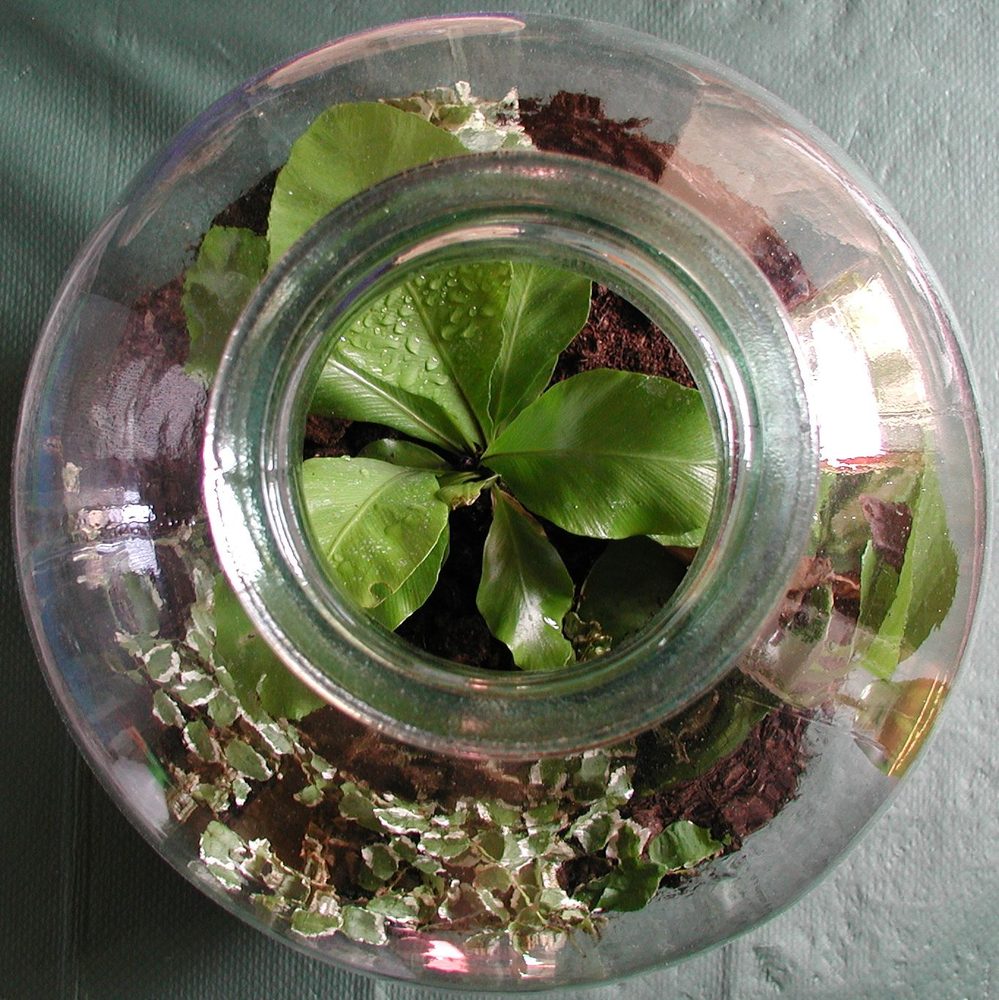
There's something quietly magical about a sealed glass jar that grows a living, breathing miniature forest, one you might water only two or three times a year. A closed terrarium recycles its own moisture in an endless cycle of evaporation and condensation, creating a warm, humid climate that tropical plants adore. Get the foundations right and it will look after itself for years.
This guide walks you through the whole process: the container, the layers, the best plants, and the handful of beginner mistakes that trip most people up. If you'd like a refresher on the science first, our explainer on what a terrarium is and how it works covers the water cycle in detail.
What you'll need
You can build a beautiful closed terrarium with just a handful of materials. Here's the essential kit, each links to more detail where we've written a full guide.
- A sealable glass container Shop jars →
- Drainage layer leca or fine gravel Which to use →
- Activated charcoal Why it matters →
- Airy terrarium substrate Shop soil →
- Humidity-loving plants Best picks →
- Sheet or cushion moss Moss care →
- Long tweezers, a spoon & a mister Tool kit →
Build it step by step
Set aside about 45 minutes and work from the bottom up. Each layer has a job to do.
Add a drainage layer
Pour 2–3 cm of leca (clay balls) or fine gravel into the base. Closed terrariums have no drainage hole, so this reservoir holds excess water safely below the soil where it can't rot your roots. For a full comparison of materials, see our guide to the best drainage layer materials.
Sprinkle activated charcoal
Add a thin scattering of activated charcoal over the drainage. It helps filter the water and keeps the sealed environment smelling fresh, discouraging the funky odours that can develop in a stagnant, humid space.
Add your substrate
Now the growing medium. Add a generous layer of airy, tropical terrarium substrate, deep enough for your plants' roots (usually 4–6 cm). Never use heavy garden soil: it compacts, holds too much water, and suffocates roots in a humid jar. Shape the surface into gentle hills and valleys for visual depth.
Plant, largest first
Dig small holes with a spoon and plant from largest to smallest, so the big feature plants don't crush the delicate ones. Gently tease apart rootballs, place each plant, and firm the substrate around it with your fingers or tweezers. Leave a little breathing room, plants will grow to fill the space. Not sure what to plant? Our roundup of the best plants for closed terrariums lists foolproof beginner options.
Carpet with moss & add décor
Press sheet or cushion moss over any bare soil, it locks in moisture, prevents erosion, and gives that lush forest-floor look. Add stones, driftwood, or a small figurine for character. Keep hardscape off the glass so condensation can still run freely.
Mist lightly and seal
Give everything a light misting, just enough to settle the moss and lightly dampen the substrate, not soak it. Wipe the inside of the glass clean, pop the lid on, and your closed terrarium is complete.
Caring for your closed terrarium
Light
Bright, indirect light is perfect. Never place a sealed terrarium in direct sun, the glass magnifies heat and can cook your plants within hours. A spot near a bright window (but out of the sun's direct path) is ideal.
Watering
Here's the best part: you'll barely water at all. A healthy closed terrarium recycles its own moisture and can go weeks or months untouched. The glass itself is your gauge, a light mist of condensation that clears through the day means the balance is right.
Reading the condensation
Foggy every morning, clearing by afternoon? Perfect. Permanently drenched and you can't see in? Open the lid for a few hours to vent, then reseal. Bone dry with no condensation at all? Add a small mist. For the full routine, see our terrarium care guide and when things need a tidy, how to clean your terrarium.
Common problems & quick fixes
- Mould on the surface: usually too much moisture or dead plant matter. Remove affected material, vent the lid, and cut back on water. A healthy cleanup crew of springtails helps too.
- Yellowing leaves: often too much light or overwatering. Move to a shadier spot and check the condensation balance.
- Leggy, stretching plants: not enough light. Shift closer to a bright window or add a grow light.
- Rotting stems: the substrate is waterlogged. Vent the terrarium open for a day or two to dry it back.
Not sure what to put in yours?
Use our free interactive Terrarium Builder to design your layers and get a personalised plant & supply list.
Try the Terrarium Builder


Frequently asked questions
Do closed terrariums need watering?
Rarely. A sealed terrarium recycles its own moisture through condensation, so it may go months without watering. Only add a light mist if the glass stays completely clear for several days.
Where should I put a closed terrarium?
In bright, indirect light, never direct sun, which turns a sealed jar into an oven and cooks the plants.
Why is my closed terrarium foggy?
A little condensation is healthy and expected. If the glass is so fogged you can't see inside, open the lid for a few hours to release excess moisture, then reseal.
Can succulents grow in a closed terrarium?
No. Succulents and cacti need dry air and will rot in high humidity. Use tropical, humidity-loving plants like fittonia, ferns, and moss instead.
Some links in this article are affiliate links. If you buy through them we may earn a small commission at no extra cost to you, it helps keep Terrarium Creations growing. We only recommend products we'd use ourselves.