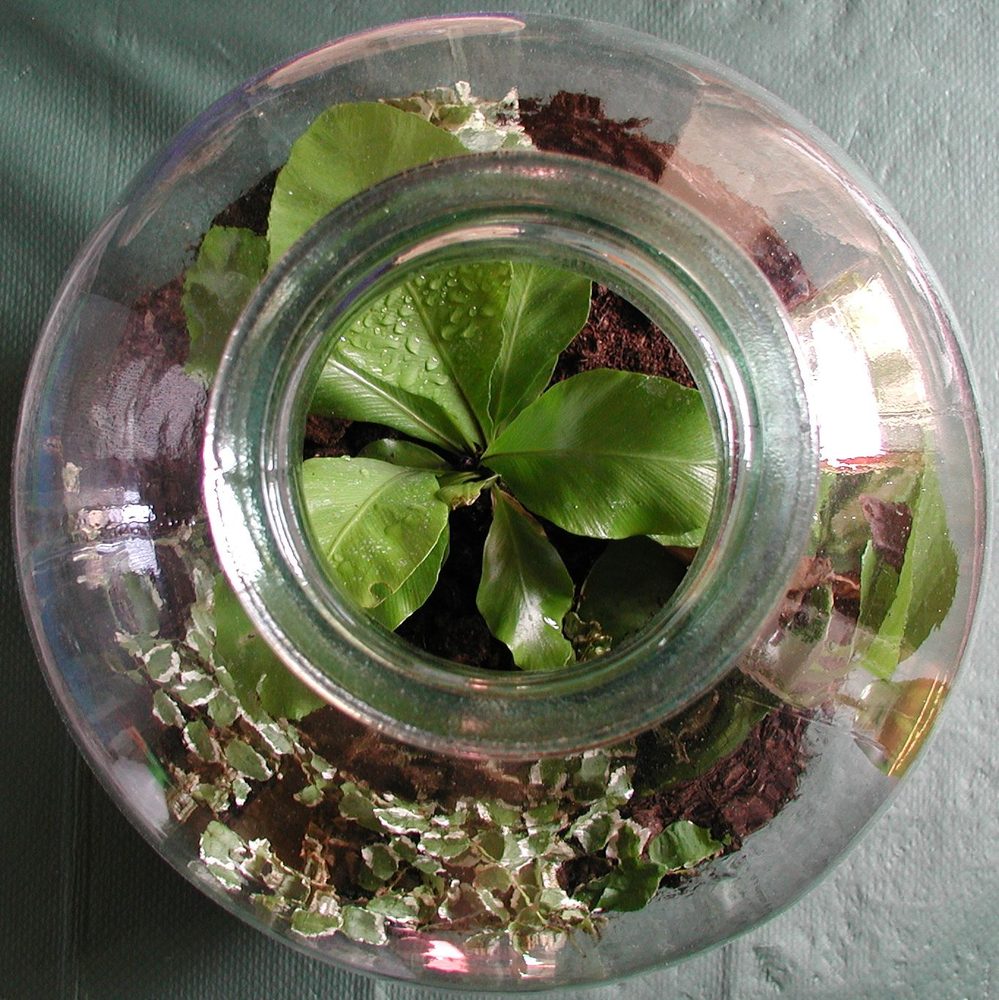
The difference between an open and a closed terrarium comes down to a single feature, the lid, but that one detail changes everything inside. A closed terrarium traps moisture to create a warm, humid jungle; an open one lets air flow freely for plants that like it dry. Neither is "better." The right choice simply depends on the plants you love and the look you're after.
The key difference: humidity
A closed terrarium has a lid or seal. Water evaporates, condenses on the glass, and trickles back down in a continuous cycle, so the air inside stays humid and the terrarium largely waters itself. An open terrarium has no lid. Moisture escapes into the room, the air inside stays dry, and you water it like a normal potted plant. If you'd like the full science, see our explainer on how a terrarium works.
Side by side
| Closed terrarium | Open terrarium | |
|---|---|---|
| Humidity | High & self-sustaining | Low & dry |
| Best plants | Ferns, moss fittonia, tropical foliage | Succulents, cacti, air plants |
| Watering | Rarely, weeks or months | Regularly, like a houseplant |
| Light | Bright, indirect (never direct sun) | Bright light; some sun tolerated |
| Maintenance | Low, but watch for mould | Higher watering, very forgiving |
| Look | Lush, mossy, "jungle in a jar" | Sculptural, desert, airy |
Choose a closed terrarium if…
- You love the lush, green, mossy "jungle under glass" look.
- You want something that mostly cares for itself once established.
- You're drawn to ferns, moss, fittonia and tropical foliage.
- You tend to forget to water things (a sealed terrarium is forgiving of neglect, just not of overwatering).
Ready to build one? Follow our step-by-step guide to making a closed terrarium and see the best plants for closed terrariums.
Choose an open terrarium if…
- You love succulents, cacti or air plants.
- You want a brighter, more sculptural, desert-style display.
- Your space gets plenty of light and some direct sun.
- You don't mind watering on a regular schedule.
Which is easier for beginners?
Both are beginner-friendly in different ways. A closed terrarium is wonderfully low-effort once it's balanced, it can go weeks without a glance, but the classic beginner mistake is overwatering, which invites mould. An open terrarium asks for more frequent watering, but it's very hard to get "wrong" and there's no humidity to manage. If you want set-and-forget, go closed and water sparingly. If you want simple and forgiving, go open.
Ready to build?
Our complete step-by-step guide walks you through a closed terrarium, layer by layer.
How to Make a Closed Terrarium


Frequently asked questions
What is the difference between an open and closed terrarium?
A closed terrarium has a lid and traps humidity, recycling its own moisture for tropical, humidity-loving plants. An open terrarium has no lid, stays dry and airy, and suits succulents, cacti and air plants.
Are open or closed terrariums easier for beginners?
Closed terrariums largely self-water once set up but can mould if overwatered. Open terrariums need more regular watering but are very forgiving.
Can you put succulents in a closed terrarium?
No, succulents and cacti need dry air and will rot in high humidity. Use them only in open terrariums.
Some links in this article are affiliate links. If you buy through them we may earn a small commission at no extra cost to you, it helps keep Terrarium Creations growing. We only recommend products we'd use ourselves.