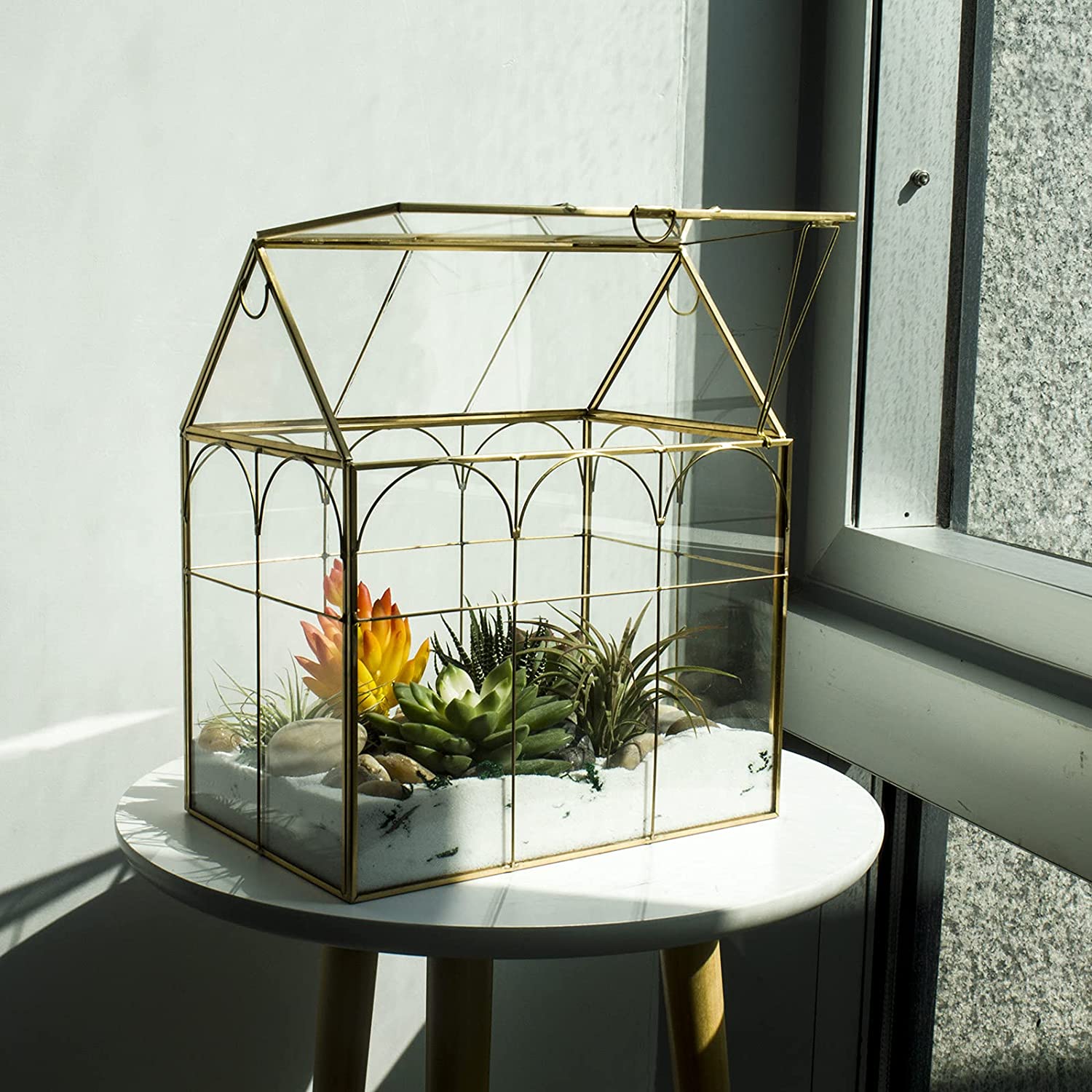
Few terrarium vessels are as charming as a house-shaped glass terrarium a little glass greenhouse for your plants, complete with pitched roof. It's the perfect frame for a miniature garden, and it makes a lovely gift or centrepiece.
Building a whimsical scene? See our full guide to fairy garden terrariums.
Open or closed? Check the door
Most house-shaped terrariums have a hinged or panelled opening, which makes them open or semi-open. If air passes freely, plant it like an open terrarium; if it has a snug-sealing door, you can grow humidity-lovers instead:
- Open house terrarium → succulents cacti and air plants.
- Sealed house terrarium → moss ferns and other jungle-floor plants.
How to plant your miniature house garden
- Drainage gravel or LECA, since there's no drainage hole.
- Charcoal a thin layer to keep things fresh.
- Substrate matched to your plants (cactus mix vs moisture-retentive).
- Landscape it plant through the door with long tweezers then add stones, sand or tiny figures to make it a scene.
See the full build in our step-by-step guide.
Caring for a house terrarium
Give it bright, indirect light never direct sun, which overheats the glass. Water lightly and only when the substrate dries (succulents every 2–3 weeks; a light mist for moss builds).
Where to buy a house-shaped terrarium
They come in clear, black and gold-framed styles:
- NCYP house-shaped terrarium with front door a closable glass "house".
- Geometric house terrarium with lid a great starter size.
More in our curated shop.
Frequently asked questions
What can I plant in a house-shaped terrarium? Succulents and air plants if it's open; moss and ferns if it seals shut.
Are house terrariums beginner-friendly? Very, just start with a drainage layer and match your plants to whether it's open or closed.


Some links in this article are affiliate links. If you buy through them we may earn a small commission at no extra cost to you, it helps keep Terrarium Creations growing.