Buying guide
Hanging & Wall Terrariums
Hanging and wall-mounted terrariums bring greenery up into the air, into a window, over a desk, along a bare wall, without giving up a scrap of surface space. They're perfect for air plants, cuttings and small succulents, and a cluster of them turns an empty corner into a living display. Here's the difference between the styles, the best vessels, which plants to use, how to plant and hang one, and where to buy.
Updated August 2026 · We may earn a commission from links on this page, at no extra cost to you.
Our quick picks


The two families: hanging vs wall-mounted
Almost every option is one of two things. Hanging terrariums are glass globes, orbs or teardrops suspended on a cord or hook, they float in a window or from a ceiling and are made for air plants. Wall-mounted terrariums are flat-backed vessels or vases that sit against a wall like living art, often used for cuttings and propagation as well as plants.
A third, closely related option is a hanging or standing propagation display, glass tubes and orbs on a wooden stand, which gives you the same look without drilling into a wall.
Hanging glass globes & orbs
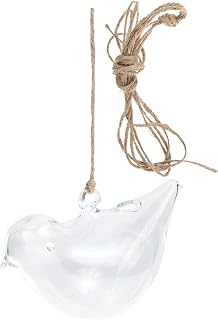
The classic hanging terrarium: a clear glass sphere with a side opening, hung on a cord. Best for air plants (no soil needed) and stunning in a sunny window. Buy a set and cluster them at different heights.


Wall-mounted terrariums & vases
Flat-backed glass that mounts to a wall like a picture, greenery without a shelf. Great for a living wall of cuttings, air plants or trailing plants.


Hanging & standing propagation displays
The same airy, glass-and-greenery look on a wooden stand, no wall fixings required. These double beautifully as terrariums for air plants or as propagation stations for cuttings.


Open or closed?
Nearly all hanging and wall vessels are open, they have a side opening and good airflow, which makes them ideal for plants that like it dry and airy. That points you straight to air plants and succulents. A few globes seal well enough to hold humidity for a small moss build, but as a rule, treat hanging terrariums as open. See open vs closed terrariums.
The best plants for a hanging terrarium
- Air plants (Tillandsia), the number-one choice. No soil at all, just rest one inside. See the air plant guide.
- Small succulents, for an open globe with a little gritty mix; they love the bright, airy spot.
- Trailing plants & cuttings, string-of-pearls, pothos or philodendron cuttings that spill and root, perfect for wall vases.
- Moss, only in a globe that seals reasonably well, for a small humid build.
Avoid thirsty, fast tropicals, the small volume dries out too quickly. Browse the plant library for compact options.
How to plant and hang one
- Air plants: no soil, no drainage, just set the plant inside, maybe on a little decorative sand or pebbles. The easiest terrarium there is.
- Succulents: a thin drainage layer of fine gravel, then a gritty cactus mix, then the plant. Keep it shallow so the globe stays light.
- Hang it safely: use the hook or cord provided; for a ceiling or wall, fix into a stud or use a proper wall anchor rated for the filled weight, glass plus damp soil is heavier than it looks.
- Wall vessels: mount flat-backed vases with the nail or hook supplied, and keep them at a height you can reach to water.
Where to hang them
- A bright window, the classic spot; air plants and succulents love the light. Avoid harsh, direct midday sun through the glass, which can scorch.
- An empty corner or bare wall, a cluster instantly fills dead space with life.
- Above a desk or kitchen bench, greenery at eye level without losing surface.
Cluster in odd numbers (three or five) at staggered heights for the best effect.
Caring for hanging & wall terrariums
- Air plants: soak in water for 20–30 minutes about once a week, shake off the excess, and let them dry fully before returning them, trapped water rots the base. See how often to water.
- Succulents: water sparingly, only once the mix is fully dry (every 2–3 weeks).
- Cuttings: top up the water and refresh it weekly so it stays clear.
- Light & dusting: bright, indirect light, and wipe the glass occasionally so the display stays crisp.
Where to buy hanging & wall terrariums
- Amazon, the widest range of globes, wall vases and stands, often in value multipacks. Links open your local Amazon automatically. Browse hanging glass terrariums and wall-hanging planters.
- Etsy and independent makers, for hand-blown globes and macrame-hung pieces with real character, worldwide.
- Local, by region: in Australia, Kmart, IKEA and homewares shops carry hanging vases and glass globes (see glass vessels at IKEA); in the US, craft and homewares stores stock similar ranges.
Frequently asked questions
What plants go in a hanging terrarium?
Air plants (Tillandsia) are ideal, no soil needed. Small succulents suit open globes with a gritty mix, and trailing plants or cuttings work well in wall vases. Moss only suits a globe that seals well.
Are hanging terrariums open or closed?
Almost all are open, with a side opening and good airflow, which is why they suit air plants and succulents rather than humidity-loving moss.
How do I water a hanging glass globe?
For an air plant, take it out and soak it for 20–30 minutes weekly, then dry it fully before returning it. For a succulent, water the mix sparingly only once it's dry.
How do I hang one safely?
Use the cord or hook supplied, and for a wall or ceiling fix into a stud or a proper anchor rated for the filled weight, glass plus damp soil is heavier than it looks.
Can I put a real plant with roots in a wall vase?
Yes, wall vases are great for rooted cuttings and small trailing plants; keep the water topped up and refreshed, or use a little substrate for potted plants.
Keep reading
As an Amazon Associate we earn from qualifying purchases. Availability and prices may change over time.