Buying guide
Preserved Moss Wall Art
A panel of real, preserved moss brings a slice of forest indoors with none of the upkeep, no water, no light, no soil. It stays soft and green for years, which is why moss walls have jumped from boutique hotels and offices into homes. This is the complete guide: what it actually is, the styles and moss types, how to size and choose a piece, how to care for it, how to make your own, and where to buy.
Updated August 2026 · We may earn a commission from links on this page, at no extra cost to you.
Our quick picks


What preserved moss wall art actually is
Preserved moss wall art is made from real moss, not plastic, that has been treated so it keeps its soft, vivid green look permanently. The living moisture is replaced with a glycerin-based solution (or the moss is gently freeze-dried), leaving it fresh and pliable but biologically inactive. It no longer grows or photosynthesises, so it asks nothing of you.
That's the whole appeal: the texture, colour and calm of a living green wall without misting, grow lights or maintenance. It also softens sound and adds a genuine sense of nature to a room, which is why designers reach for it in offices, cafes and, increasingly, homes.
The four moss types you'll see
Most moss art blends two or three textures. Knowing them helps you picture the finished look and shop the right materials:
Reindeer moss
Springy, coral-like tufts (technically a lichen). The workhorse of moss art, it comes in every green plus dyed colours and fills space fast.
Bun / pole moss
Rounded, velvety cushions that add three-dimensional "hills". Used in clusters for depth against flatter moss.
Sheet / flat moss
Thin, flat sheets that carpet a backing evenly, ideal as the base layer under bun and reindeer moss.
Mood moss
Clumpy, forest-floor tufts with a wilder, more natural look, lovely for organic, freeform pieces.
Ready-made moss wall art
Hang-and-enjoy framed pieces. A round or square panel is the easiest start; a set of two or three creates a gallery-wall effect on a bigger space.

DIY kits and frames
Making your own is cheaper and genuinely satisfying. A kit bundles the frame and moss; otherwise buy a frame you like and add moss separately.


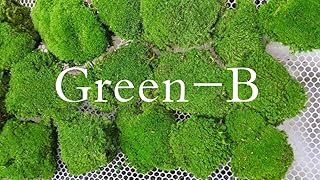

Preserved moss by the bag (for DIY)
The raw material for any project. Reindeer moss is the springy classic; buy a couple of greens plus bun or sheet moss to build depth and contrast.


The main styles
Once you start looking, moss art falls into recognisable styles, worth knowing before you buy:
Framed panels
Moss inside a timber or metal frame, like a living painting. The most versatile and easiest to hang.
Freeform / organic
Frameless moss in an irregular, cloud-like shape. Sculptural and contemporary, and it scales into a statement wall.
Geometric
Moss divided into hexagons, chevrons or colour blocks for a graphic, modern look, popular in offices.
Moss and wood
Preserved moss with olive wood, driftwood or bark for a raw, natural-materials warmth.
Letters, logos and shapes
Moss packed into a name, initial, heart or brand logo, a favourite for weddings, nurseries and businesses.
Mixed botanical
Moss layered with preserved ferns, flowers and seed heads for a richer, garden-under-glass composition.
What size do you need?
Scale is what people most often get wrong, moss art wants to be bigger than you first think, because it reads as texture rather than a picture.
- Shelf, nook or desk: a single small round or square panel (about 20–30 cm) is plenty.
- Above a console, bed or sofa: aim for a piece (or set of 2–3) spanning roughly two-thirds of the furniture's width.
- Feature wall or reception: go freeform or tile several panels, this is where moss art earns its "living wall" reputation.
As a rough rule for DIY, one bag of reindeer moss (about 3.5 oz / 100 g) covers roughly a 20–25 cm panel with a natural, un-flattened look. Buy more than you think, packing it loosely for texture uses more than you'd expect.
Real preserved vs artificial vs fresh moss
Three very different things get sold as "moss wall". Here's how they compare:
| Type | Look | Upkeep | Best for |
|---|---|---|---|
| Preserved | Real, soft, natural colour variation | None, keep dry & out of sun | Most people, most rooms |
| Artificial / faux | Flat, uniform, can yellow | None, but plastic | Cheapest quick fill |
| Fresh / living | Truly alive, grows | High, needs humidity & light | Sealed terrariums, irrigated walls |
For a maintenance-free framed piece, preserved is almost always the right answer. Living moss only works in a sealed terrarium or a purpose-built irrigated wall, see our moss care guide.
How to choose
- Insist on real preserved moss. Cheap "moss walls" are often dyed plastic. Real preserved moss has natural colour variation and a springy feel; artificial looks uniform and flat.
- Match the style to the room. Framed panels suit most interiors; geometric leans modern/commercial; moss-and-wood reads rustic and warm.
- Size up. A piece that's too small looks lost, err larger or add a second panel.
- Indoors, out of the sun. Preserved moss isn't for outdoors or bright, direct light, prolonged UV fades the green.
- Buy the material if you're crafty. A DIY piece is often cheaper and more satisfying than buying finished.
Where a moss wall works best
Because it needs no light or water, preserved moss goes where real plants can't:
- Offices and receptions, greenery and a calming, sound-softening texture with zero upkeep.
- Behind a bed or above a sofa, a warm, organic feature that photographs beautifully.
- Windowless rooms and hallways, the one "plant" that thrives with no light at all.
- Rentals, nature without soil, drips or drama.
- Weddings and events, moss letters, signs and backdrops are a booming use.
Avoid a steamy bathroom or anywhere in direct sun, damp and UV are what shorten its life.
Caring for a moss wall (it's almost nothing)
This is the easiest "plant" you'll ever own:
- Never water it, and skip humidifiers and steamy rooms.
- Keep it out of direct sun to protect the colour, and away from extremes of heat or cold.
- Dust gently now and then with a soft brush, a hairdryer on cool, or a puff of air.
- A little shedding is normal at first, especially with reindeer moss, tuck stray pieces back or trim them.
Do that and a good piece holds its look for many years. For the science of how preservation works, see our note on caring for moss in terrariums.
Make your own moss wall art
A DIY piece is genuinely easy and a lovely afternoon project:
- Start with a backing, a timber frame, canvas, round wooden board or shadow box.
- Get preserved reindeer moss (plus a little bun moss for contrast). A mixed-green multipack adds depth.
- Glue the moss on with a hot-glue gun, working in clumps and varying heights and greens so it looks natural, not flat.
- Fill gaps, tuck in a preserved fern or piece of bark if you like, and let it set.
The DIY kit above bundles the essentials, or buy the preserved moss and supply your own frame. Source moss responsibly, see our guide to sourcing moss sustainably.
Where to buy moss wall art
Three routes, depending on whether you want ready-made, custom, or to build it yourself:
- Amazon, quickest for ready-made panels, DIY moss and kits. Links here open your local Amazon automatically. Browse preserved moss wall art or preserved reindeer moss to DIY.
- Etsy and independent makers, the best source for one-off, custom and commissioned pieces (moss logos, wedding signs, large freeform walls) worldwide.
- Local, by region: in Australia, plant and homewares shops and Etsy AU makers; in the US, craft chains and Etsy sellers carry both finished pieces and DIY moss. For gallery-grade work, see our features on TerraLiving and the Vertex ZERO moss wall.
Frequently asked questions
Is preserved moss wall art real moss?
Yes, quality pieces are made from real moss preserved (usually with a glycerin solution) so it stays soft and green without being alive. Avoid dyed plastic "moss walls", which look flat and uniform.
Does a moss wall need light or water?
No. Preserved moss is biologically inactive, so it needs no water, no light and no feeding. Watering it actually shortens its life. Keep it dry and out of direct sun.
How long does preserved moss wall art last?
Kept indoors, dry and out of direct sunlight, a good piece holds its colour and texture for many years, often five or more.
How much moss do I need to make one?
Roughly one 3.5 oz / 100 g bag of reindeer moss per 20–25 cm panel, packed loosely for texture. Buy a little extra, and add bun or sheet moss for depth.
Is it good for offices or people without a green thumb?
Ideal. It brings greenery and a calming, sound-softening texture with zero maintenance, which is why it's so popular in offices, receptions and rentals.
Does preserved moss shed or smell?
A little shedding is normal at first, especially reindeer moss, just tuck or trim stray pieces. Quality preserved moss is odourless; a faint scent usually fades.
Keep reading
As an Amazon Associate we earn from qualifying purchases. Availability and prices may change over time.