Buying guide
Geometric Glass Terrariums
Faceted glass "glass houses", pyramids, pentagons and gold-framed vessels turn a terrarium into a design object. They're the most popular modern terrarium shape, and the one detail that decides everything, which plants you can grow, is whether they're open or sealable. Here's how to choose, the best vessels by style, the plants that suit each, how to plant one, and where to buy.
Updated August 2026 · We may earn a commission from links on this page, at no extra cost to you.
Our quick picks



What makes a geometric terrarium
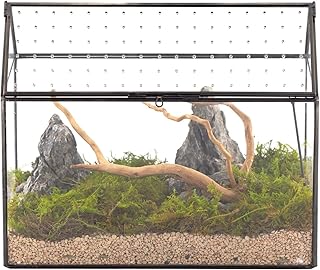
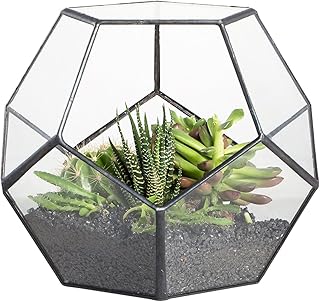
A geometric terrarium is a glass vessel built from flat, soldered panels into a faceted shape, a cube, pyramid, pentagon, dodecahedron or a little pitched-roof "glass house". The angular metal framing (gold, black or copper) is half the appeal: it reads as much like sculpture as a planter. Beyond looks, the key question is the opening.
Some have a small permanent opening or an open top (an open terrarium); others have a snug-fitting door or lid that traps humidity (a closed terrarium). That single feature sets your plant list.
Open geometric terrariums
Open shapes have airflow, which suits plants that like it dry. Reach for succulents, cacti and air plants.


Closed & lidded geometric terrariums
A door or lid lets the vessel hold humidity, so you can grow a lush, mossy world of ferns and tropical foliage.


Statement shapes
When the vessel is the star, a dodecahedron, a pentagon or a hanging jewel makes a genuine centrepiece. Choose the shape first, then plant to suit whether it's open or sealed.



Open or closed? Check the opening
Most geometric vessels are open or semi-open. If air passes freely through the seams or top, treat it as open and plant succulents, cacti or air plants. If it has a snug door or lid, you can seal it as a closed terrarium for moss and ferns, just expect some condensation. New to the difference? See open vs closed terrariums.
The best plants for a geometric terrarium
- Open shapes, succulents, cacti and air plants (Tillandsia), which love the airflow and bright light.
- Closed shapes, moss, small ferns, fittonia and baby's tears, which thrive in trapped humidity. See best plants for closed terrariums.
Never seal succulents in a closed geometric, they rot in the humidity. Browse the plant library for options.
How to plant one
- Drainage. 2–3 cm of gravel or LECA (there's no drainage hole).
- Charcoal. A thin layer of activated charcoal, especially for a sealed build.
- Substrate. A gritty cactus mix for an open build, or a moisture-retentive mix for moss.
- Plant through the panel. The angular opening is the fiddly part, use long tweezers to place plants and hardscape.
- Finish. Top-dress with sand or pebbles, and keep it out of direct sun (angled glass amplifies heat).
Choosing the right one
- Open vs closed, decide your plants first, then match the opening.
- Frame colour, gold and brass read warm and classic; black is modern and makes greenery pop; copper suits rustic rooms.
- Size & opening, a wider opening is far easier to plant than a tiny faceted door.
- Build quality, look for cleanly soldered seams and true panels; cheap vessels can leak light and wobble. See our best terrarium containers.
Caring for a geometric terrarium
- Light, bright, indirect. Direct sun through angled glass overheats the interior fast.
- Water, succulents in an open shape need only a small drink every 2–3 weeks; a sealed mossy build needs occasional misting when condensation stops.
- Clean the glass, wipe the panels so those crisp lines stay the star.
Where to buy geometric terrariums
- Amazon, the widest range of shapes and frame colours (NCYP and similar makers). Links open your local Amazon automatically. Browse geometric glass terrariums and glass house terrariums.
- Etsy and independent makers, for hand-soldered stained-glass geometric pieces with real craft, worldwide.
- Local, by region: in Australia, homewares shops, Kmart and IKEA carry geometric vessels (see glass vessels at IKEA); in the US, craft and decor stores stock similar ranges.
Frequently asked questions
Are geometric terrariums open or closed?
Most are open or semi-open with airflow, which suits succulents and air plants. Some have a snug door or lid and can be sealed for moss and ferns, check the opening before you plant.
What plants go in a geometric terrarium?
Open shapes suit succulents, cacti and air plants; sealed shapes suit moss, small ferns and fittonia. Never seal succulents in a humid closed vessel.
Do geometric terrariums need a drainage layer?
Yes, they have no drainage hole, so start with 2–3 cm of gravel or LECA and a thin charcoal layer to keep roots out of standing water.
Why is my geometric terrarium overheating?
Direct sun through the angled glass acts like a lens. Move it to bright, indirect light rather than a sunny windowsill.
What frame colour should I choose?
Gold and brass are warm and classic, black is modern and makes plants pop, and copper suits rustic interiors. It's purely aesthetic, so match your room.
Keep reading
As an Amazon Associate we earn from qualifying purchases. Availability and prices may change over time.